The Ultimate Ramen Guide: Styles, Broths, Noodles & Toppings | Springroll Meta
Explore Japanese ramen styles, from rich Tonkotsu to delicate Shio. Discover broths, noodles, toppings, and order your favorite bowl on Springroll today!
Read more
Ramen has evolved from a humble street food in Japan into a global culinary obsession. Far more than just a quick comfort food, a proper bowl of ramen is a masterclass in balance, texture, and deep flavor extraction. Every regional style offers a unique story, told through meticulously simmered broths, distinct noodle profiles, and carefully curated toppings.
Whether you are a seasoned connoisseur or looking to order your very first authentic bowl online, understanding the key components of ramen will transform how you appreciate every single spoonful. In this comprehensive guide, we break down everything you need to know about ramen broths, noodle selections, regional styles, and signature toppings—along with where you can order the best bowls directly through Springroll.
At the absolute heart of every ramen dish is its broth. The broth defines the character of the bowl and dictates how the noodles and toppings interact. Ramen broths are generally categorized by their primary seasoning agent, known as tare, or by the density and composition of the base stock.
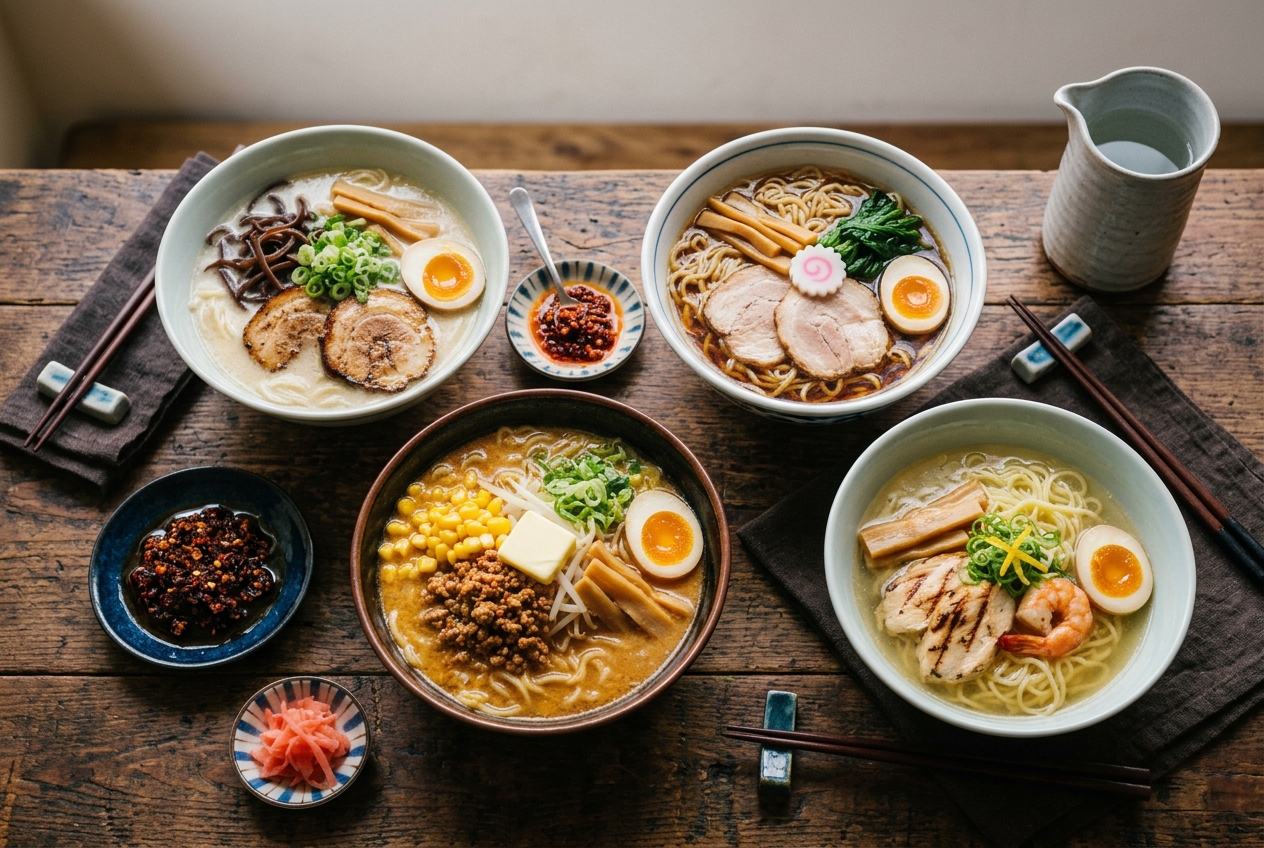
Tonkotsu is arguably the most famous ramen broth outside of Japan, originating from the Hakata district in Fukuoka. Unlike clear broths, Tonkotsu is notoriously rich, creamy, and opaque. It is created by boiling pork leg bones and collagen over high heat for anywhere from 12 to 18 hours. This extreme heat breaks down the fat and marrow, emulsifying it directly into the liquid to yield a velvety, deeply savory texture that coats the back of your spoon.
Shoyu is the historic baseline of Tokyo-style ramen. Built upon a light-to-medium clear stock made from chicken, seafood, or pork, its signature profile comes from a seasoned soy sauce tare. Shoyu ramen strikes a clean balance between savory depth and bright salinity. It carries a subtle, tangy umami flavor without feeling heavy on the palate, making it a timeless choice for everyday dining.
Hailing from the chilly northern prefecture of Hokkaido, Miso ramen is robust, nutty, and highly aromatic. Chefs blend complex fermented soybean pastes with rich chicken or pork broth, often stir-frying the mixture with garlic, ginger, and sesame oil. The resulting soup is thick and heart-warming, providing a substantial layer of warmth and complexity that holds up remarkably well to bold, spicy toppings.
Shio, or salt ramen, is the oldest known style of ramen and requires the highest level of culinary precision. Because salt itself adds clear salinity without altering the color or heavily overpowering the stock, the underlying broth—typically brewed from chicken, kelp (kombu), and dried seafood—must be impeccably clean and refined. Shio ramen is light, crisp, and nuanced, appealing to diners who prefer a delicate and refreshing bowl.
Beyond the seasoning agent, ramen lovers often categorize bowls by their body and oil content:
While broth often gets the initial spotlight, the noodles are equally vital to a great ramen experience. Crafting the perfect bowl requires pairing the right noodle texture, shape, and moisture content with the specific style of soup being served.
Ramen noodles are made from wheat flour, water, salt, and kansui—an alkaline mineral water solution that gives the noodles their signature yellow hue, springy bite, and resistance to getting soggy in hot soup.
Straight noodles are traditional for rich, heavy broths like Tonkotsu. Because they pack closely together, they draw up just the right amount of thick soup through capillary action. On the other hand, wavy noodles (chijire-men) are designed for lighter, clearer soups like Shoyu or Shio. The twists and bends in wavy noodles catch subtle droplets of broth, ensuring every bite carries plenty of flavor.
Low-hydration noodles contain less water, making them firmer and extremely porous. These noodles quickly absorb broth and are standard in Hakata-style Tonkotsu. High-hydration noodles contain more moisture, yielding a chewier, springier texture that holds up against heavy, viscous soups like Miso or Tsukemen (dipping ramen).
Toppings are far more than mere garnishes; they add crucial textural contrast, fresh acidity, and rich visual appeal to the dish.
Chashu consists of tender slices of pork belly or pork shoulder that have been rolled, braised low and slow in soy sauce, mirin, and sake, and often torched right before serving. A properly prepared piece of chashu melts in your mouth, contributing a rich, smoky savoriness to the bowl.
No bowl of ramen feels truly complete without a soft-boiled jammy egg. Ajitama eggs are boiled precisely so the white is set while the yolk remains soft and custard-like. They are then marinated in a soy-mirin bath for several hours, infusing the outer layer with umami while preserving a rich, golden center.
Menma offers an essential crunchy counterpoint to tender noodles and soft meats. These bamboo shoots are lacto-fermented, sliced, and simmered in a savory broth, bringing a slightly woody, earthy flavor to the dish.
A crisp sheet of dark green nori resting against the side of the bowl adds an ocean-fresh minerality to the aroma. Diners often submerge the sea vegetables into the broth near the end of their meal to enrich the final bites.
Fresh green scallions provide a sharp, pungent bite that cuts through heavy animal fats. Kikurage (wood ear mushrooms) supply an unforgettable snap and chew, while blanched bean sprouts add crispness and volume to heartier Miso dishes.
Japan features dozens of distinct regional ramen micro-cultures. Here are three iconic regional styles every fan should know:
Ramen pairs well with gyoza. To learn how gyoza, potstickers, and other dumplings differ, see Springroll’s The Ultimate Guide to Asian Dumplings.
Craving a bowl of ramen delivered right to your door? Springroll connects you directly with premier local Asian restaurants crafting authentic regional styles. Here are some featured local favorites where you can order online today:
Satisfying your craving for a steamy bowl of ramen has never been easier.
Love noodle soups? Explore more bowls in Springroll’s Vietnamese Noodle Soups Beyond Pho You Should Try.
Ready to explore the best local ramen spots in your neighborhood? Visit Springroll.com today, explore local menus, and order fresh ramen!