Thai Curry Guide: Red, Green, Yellow & Panang Explained
Explore the unique flavors, heat levels, and ingredients of Thai red, green, yellow, and Panang curries. Order your favorite Thai curry online today!
Read more
Thai cuisine is celebrated worldwide for its vibrant flavors, fragrant aromatics, and precise balance of sweet, sour, salty, and spicy elements. Among the vast spectrum of iconic dishes, few meals capture the essence of Thai home cooking and culinary heritage quite like a freshly prepared curry. Rich, coconut-infused, and brimming with fresh herbs, Thai curries offer a complex flavor profile that satisfies both comfort seekers and spice enthusiasts alike.
If you have ever stared at a menu wondering how a vibrant green curry differs from a rich, nutty Panang curry, you are not alone. While all traditional Thai curries share a foundation of pounded fresh herbs and coconut milk, each variation features a distinct paste composition, heat level, and ingredient lineup. In this guide, we will break down the origins, ingredients, and key differences among four of the most popular Thai curries: Red, Green, Yellow, and Panang.
To truly appreciate Thai curry, it helps to understand what sets it apart from Indian or Middle Eastern curry styles. While Indian curries often rely heavily on dry toasted spices like cumin, coriander powder, and turmeric, traditional Thai curries depend on a wet paste made from fresh herbs, roots, and aromatics.
A traditional Thai curry paste is made by pounding fresh ingredients using a heavy stone mortar and pestle. This crushing action releases the natural oils and juices of fresh ingredients like lemongrass, galangal, kaffir lime peel, cilantro roots, garlic, and shallots. Combined with either fresh or dried chilies, this freshly ground paste provides the distinct flavor base for every bowl.
When cooked, the paste is fried briefly in a splash of thick coconut cream until the oil separates. This technique—known as "cracking" the coconut cream—blooms the aromatics and locks in deep, layered flavors before liquid coconut milk and proteins are added.
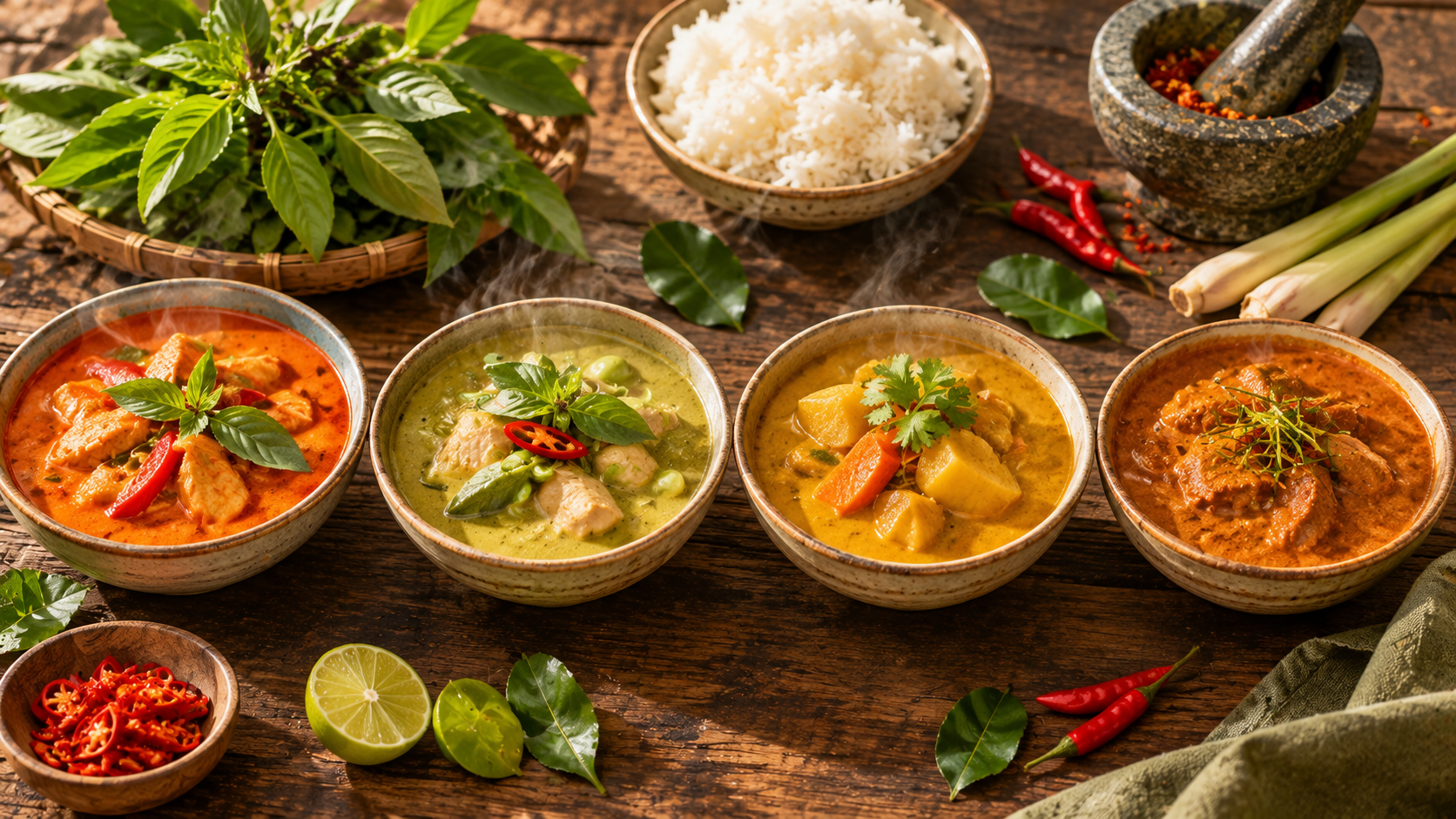
Red Curry, known in Thailand as Gaeng Phet (which translates literally to "spicy curry"), is one of the most classic and widely recognized dishes in Thai cuisine. It features a deep crimson color and a bold, fiery flavor balanced by subtle sweetness. The defining ingredient in Red Curry paste is dried red spur chilies, which are soaked and ground with lemongrass, garlic, shallots, galangal, kaffir lime zest, and coriander root.
Unlike Green Curry, which derives its brightness from fresh green herbs, Red Curry delivers an earthier, lingering warmth. The sweetness of coconut milk softens the chili heat, creating a glossy sauce that coats every ingredient beautifully.
Red Curry is exceptionally versatile and pairs well with almost any protein. Traditional choices include tender slices of beef, chicken breast, or pork. In coastal regions, seafood variations featuring prawns, squid, or firm white fish are equally popular.
Vegetables used in Red Curry are chosen for their ability to absorb the savory sauce. Bamboo shoots, red bell peppers, and Thai eggplant are standard additions. The dish is usually finished with a scattering of fresh Thai basil leaves (horapha), which add an anise-like aroma just before serving.
Green Curry, or Gaeng Keow Wan, translates to "sweet green curry." Do not let the word "sweet" fool you, however—Green Curry is widely considered the spiciest of the central Thai curries. The "sweet" in its name refers to the soft, pale green hue created when fresh green chilies are blended with silky white coconut milk.
The paste relies on young, fresh green Thai bird's eye chilies, which pack a sharper heat than dried red chilies. Alongside lemongrass, garlic, and shallots, Green Curry paste incorporates fresh coriander leaves, roots, and sweet Thai basil, giving the sauce its signature emerald color and bright, herbal character.
Because Green Curry offers a fresh, herbaceous flavor profile, it pairs exceptionally well with lighter proteins such as tender chicken, pork, or delicate white fish. Succulent fish balls (luk chin pla) are another traditional pairing found throughout night markets in Bangkok.
Common vegetable pairings include small round Thai eggplants, pea eggplants, bamboo shoots, and green beans. The sharp heat of the green chilies combined with the fragrant aroma of kaffir lime leaves makes Green Curry an absolute favorite for spice lovers.
If you are looking for a milder, deeply aromatic option, Yellow Curry (Gaeng Karee) is an excellent choice. Yellow Curry shows a clear historical influence from Indian and Malaysian trade routes, incorporating warm dry spices alongside traditional Thai aromatics.
The glowing golden color of Yellow Curry comes from fresh or dried turmeric root, which is blended into a paste containing cumin, coriander seeds, cinnamon, lemongrass, galangal, and garlic. Compared to Red and Green curries, Yellow Curry contains far fewer chilies, resulting in a gentle, warm heat that allows the earthiness of the spices to shine.
Because of its rich and comforting nature, Yellow Curry is traditionally served with chicken or beef, though tofu and vegetable options are equally delicious.
Unlike its red and green counterparts, Yellow Curry frequently features chunks of tender potatoes and whole pearl onions or thick slices of yellow onion. The potatoes soak up the aromatic coconut broth, making every bite cozy and satisfying. Yellow Curry is typically served with a side of Ajat—a light cucumber relish made with vinegar, sugar, and sliced chilies—to cut through the richness of the dish.
Panang Curry (sometimes spelled Phanaeng) is a richer, thicker cousin of red curry. Named after the island of Penang off the coast of Malaysia, this dish highlights the cross-cultural exchange of flavors across Southeast Asia.
Panang Curry paste uses dried red chilies, lemongrass, galangal, kaffir lime zest, coriander root, and cumin. What truly sets Panang apart, however, is the addition of finely ground roasted peanuts blended directly into the paste or sauce. This produces a nutty, slightly sweet, and luxurious gravy that is thicker and far less soupy than Red or Green curry.
Panang Curry is meant to be rich and concentrated, so it is typically served with minimal broth. Sliced beef is the classic choice for Panang Curry, as the rich meat complements the thick, nutty sauce, though chicken, pork, and jumbo prawns are also very popular.
Because the focus is heavily on the protein and sauce, Panang Curry uses fewer vegetables. Sliced red bell peppers are often added for color, and the dish is invariably crowned with paper-thin ribbons of fresh kaffir lime leaves and sliced red chilies. If you enjoy nutty, comforting dishes, Panang Curry is a must-try.
To help you decide which dish to order next, here is a quick breakdown comparing the four major Thai curries:
When ordering Thai curry for dinner, pairing it with the right side dishes elevates your meal into an authentic feast. Here are a few tips to maximize your dining experience:
Whether you prefer the spicy kick of a fresh Green Curry, the mild warmth of Yellow Curry, or the nutty richness of Panang, craving authentic Thai food has never been easier. With Springroll, you can discover top-rated local Thai restaurants in your neighborhood and get hot, freshly made curries delivered straight to your doorstep.
Looking for restaurant recommendations near you? Check out these partner dining spots offering authentic Thai curries on Springroll:
Thai food has become a favorite in neighborhoods across the country. To learn how it got there, read Springroll’s How Thai Food Became a Staple in American Cities. Ready to satisfy your cravings? Browse our full selection of local Thai menus on Springroll.com and place your order today!