Back-to-School Meal Ideas: Easy Asian Takeout for Busy Families
Make busy school nights easier with Asian takeout ideas for families. Discover easy, flavorful meals and order from local restaurants on Springroll.
Read more
Chinese cuisine is one of the world's oldest and most diverse culinary traditions. While many people recognize favorites like Fried Rice, Lo Mein, or Orange Chicken, these dishes represent only a small part of what Chinese cooking has to offer.
China spans thousands of miles, with each region developing its own cooking techniques, ingredients, and signature flavors. Coastal provinces rely on fresh seafood, northern regions are known for hearty noodles and dumplings, while southwestern provinces are famous for bold spices and fiery chilies. Exploring these regional specialties is one of the best ways to experience the incredible variety of Chinese cuisine.
If you've ever noticed that Chinese restaurant menus can look very different from one another, there's a reason. Many restaurants specialize in recipes inspired by specific regions of China, while others combine traditional regional dishes with popular Chinese-American favorites. If you're curious about the history behind Chinese restaurants in the United States, you may also enjoy reading The Most Popular Chinese Restaurant Names – And Why, which explores how Chinese restaurants have evolved over the years.
Whether you're ordering dinner for the family or looking to try something new, understanding regional Chinese cuisine can help you discover dishes that perfectly match your taste.
China's diverse geography has shaped its food culture for centuries.
The warm, humid south produces rice, tropical fruits, and abundant seafood. In contrast, the colder northern provinces rely more heavily on wheat, making noodles, steamed buns, and dumplings everyday staples. Mountainous regions developed bold seasonings using local spices and preserved ingredients, while coastal communities perfected delicate seafood dishes and flavorful broths.
These regional differences mean that two Chinese restaurants may serve completely different specialties depending on the traditions they follow.
Today, many restaurants also blend authentic regional cooking with Chinese-American classics, giving diners the opportunity to enjoy both traditional dishes and familiar favorites in one meal.
Curious which of these flavors is calling your name? You can find dishes from many of these regions on Springroll, so feel free to browse as you read and see what's available near you.
Originating in Guangdong Province, Cantonese cuisine is perhaps the most recognizable style of Chinese food around the world. Rather than relying on heavy spices, Cantonese chefs focus on highlighting the natural flavors of high-quality ingredients through steaming, roasting, and quick stir-frying.
Dim Sum is one of Cantonese cuisine's greatest contributions. Traditionally enjoyed with tea, these small plates include dumplings, buns, rolls, and other bite-sized dishes designed for sharing.
Other popular Cantonese dishes include Char Siu (barbecue pork), Beef with Broccoli, Sweet and Sour Chicken, and Chow Mein.
If you enjoy mild, balanced flavors with fresh ingredients, Cantonese cuisine is an excellent place to begin your journey through regional Chinese food.
Sichuan cuisine has earned a worldwide reputation for its unforgettable spice.
Native to southwestern China, this regional cuisine combines dried chilies, garlic, fermented bean paste, and the famous Sichuan peppercorn. Together they create the distinctive málà sensation—a combination of spicy heat and gentle numbing that keeps diners coming back for more.
Popular dishes include Kung Pao Chicken, Dan Dan Noodles, Mapo Tofu, Twice-Cooked Pork, and the iconic Sichuan Hot Pot.
If you're already a fan of bold stir-fries, you might also enjoy our guide to Thai vs. Chinese Stir-Fry: Flavor, Ingredient & Spice Differences, which compares two of Asia's most popular cooking styles and explains what makes each one unique.
Although often compared to Sichuan cuisine, Hunan cooking offers its own distinctive personality.
Instead of emphasizing the numbing sensation of Sichuan peppercorns, Hunan dishes rely on fresh chilies, garlic, shallots, and smoked ingredients to create deep, aromatic flavors.
Popular choices include Hunan Beef, Spicy Garlic Chicken, Chairman Mao's Red Braised Pork, and Steamed Fish with Chili Peppers.
For diners who enjoy spicy food with layers of savory flavor rather than overwhelming heat, Hunan cuisine is an excellent choice.
Northern China's colder climate has made wheat the foundation of many traditional meals. Handmade noodles, dumplings, pancakes, and steamed buns are everyday staples that have become beloved around the world.
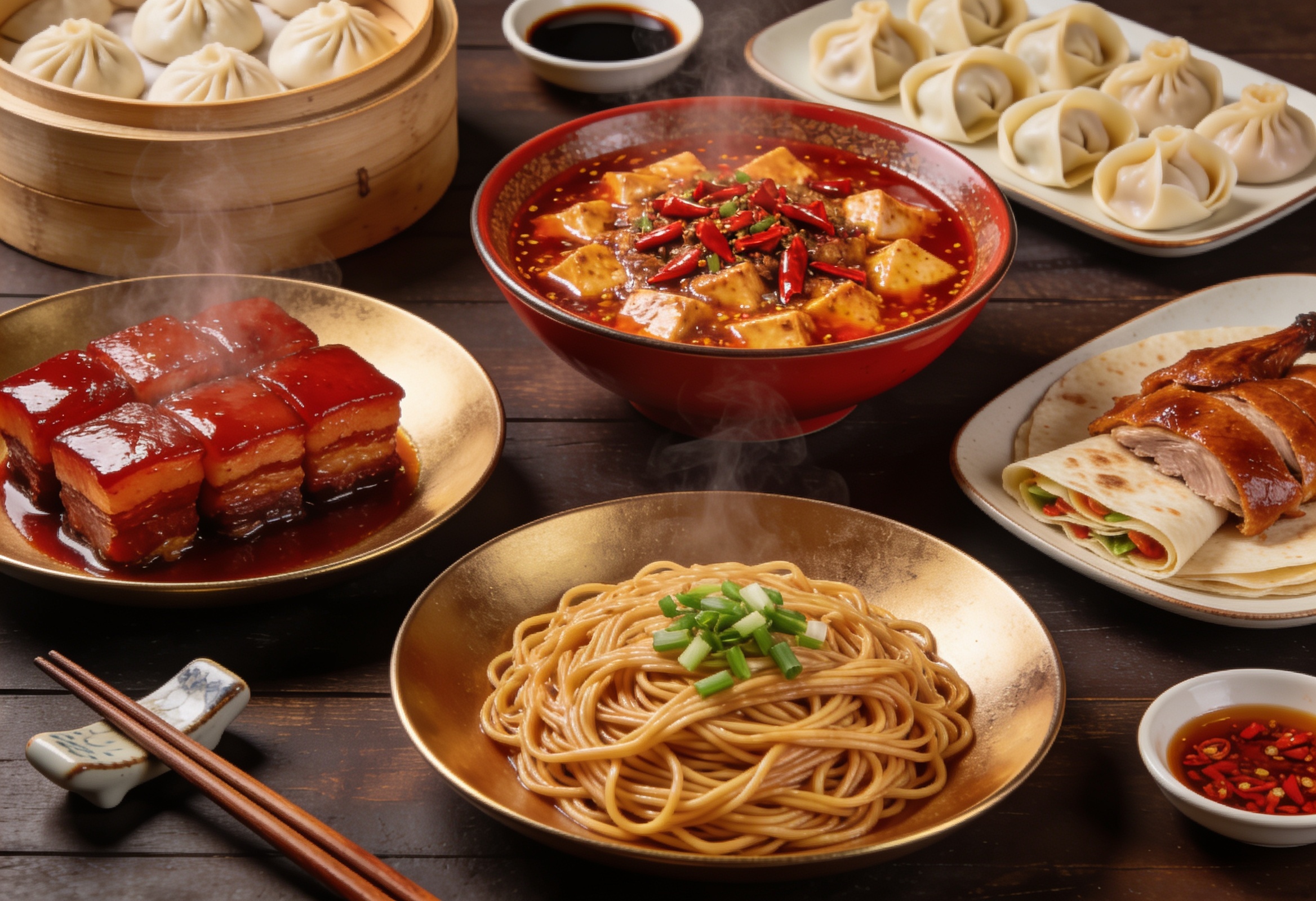
One of the region's most famous dishes is Peking Duck, known for its crispy skin and tender meat wrapped in delicate pancakes. Pork Dumplings, Zhajiangmian (noodles with savory soybean sauce), and hand-pulled noodles are equally popular comfort foods.
Many of these dishes are perfect for family-style dining, making Northern Chinese cuisine a great choice for sharing with friends and family.
Shanghai cuisine, also known as Hu cuisine, is famous for its balance of sweet and savory flavors.
Slow-braised meats, seafood, soy sauce, rice wine, and sugar are commonly used to create glossy, deeply flavorful dishes.
The region's signature dish is Xiao Long Bao, delicate soup dumplings filled with rich broth and savory meat. Other favorites include Red Braised Pork Belly, Lion's Head Meatballs, and Shanghai Fried Noodles.
Shanghai cuisine offers a refined dining experience that appeals to both adventurous food lovers and first-time explorers alike.
Located along China's southeastern coast, Fujian Province has built a culinary tradition centered around seafood, nourishing soups, and delicate seasoning.
Unlike the bold flavors found in western China, Fujian cuisine focuses on preserving the freshness of ingredients through light broths and gentle cooking methods.
Popular dishes include Fujian Seafood Soup, Braised Fish, Oyster Omelets, and Seafood Fried Rice.
If you enjoy seafood or lighter meals, Fujian cuisine is well worth exploring.
If you're new to regional Chinese cuisine, choosing where to begin can feel overwhelming. Fortunately, there's no wrong place to start.
Trying one signature dish from each region is a fun way to experience the incredible diversity of Chinese cooking.
No Chinese meal is complete without delicious starters. Crispy Spring Rolls, dumplings, and other appetizers pair perfectly with regional specialties, whether you're enjoying spicy Sichuan dishes or classic Cantonese favorites.
Want to learn more about one of Asia's most iconic appetizers? Check out The Ultimate Guide to Spring Rolls, where we explore the history, regional variations, and different ways spring rolls are enjoyed around the world.
One of the best ways to appreciate Chinese cuisine is to order dishes from different regions and compare their unique flavors.
Whether you're craving spicy Sichuan noodles, comforting Northern dumplings, delicate Cantonese Dim Sum, or Shanghai's famous soup dumplings, you'll find plenty of options from local restaurants on Springroll.
Browse menus, discover new regional specialties, and order online for convenient pickup or delivery. Every meal is an opportunity to experience another part of China's rich culinary heritage.
Chinese cuisine is far more diverse than many people realize. Each region has developed its own ingredients, cooking methods, and signature dishes that reflect centuries of history and local traditions.
From the fiery flavors of Sichuan to the delicate seafood dishes of Fujian, every region offers something unique to discover. By exploring these regional specialties one meal at a time, you'll gain a deeper appreciation for one of the world's most celebrated food cultures.
The next time you're ordering Chinese food through Springroll, step beyond your usual favorites and try something new. You may just discover your next favorite dish while supporting a local restaurant in your community.